
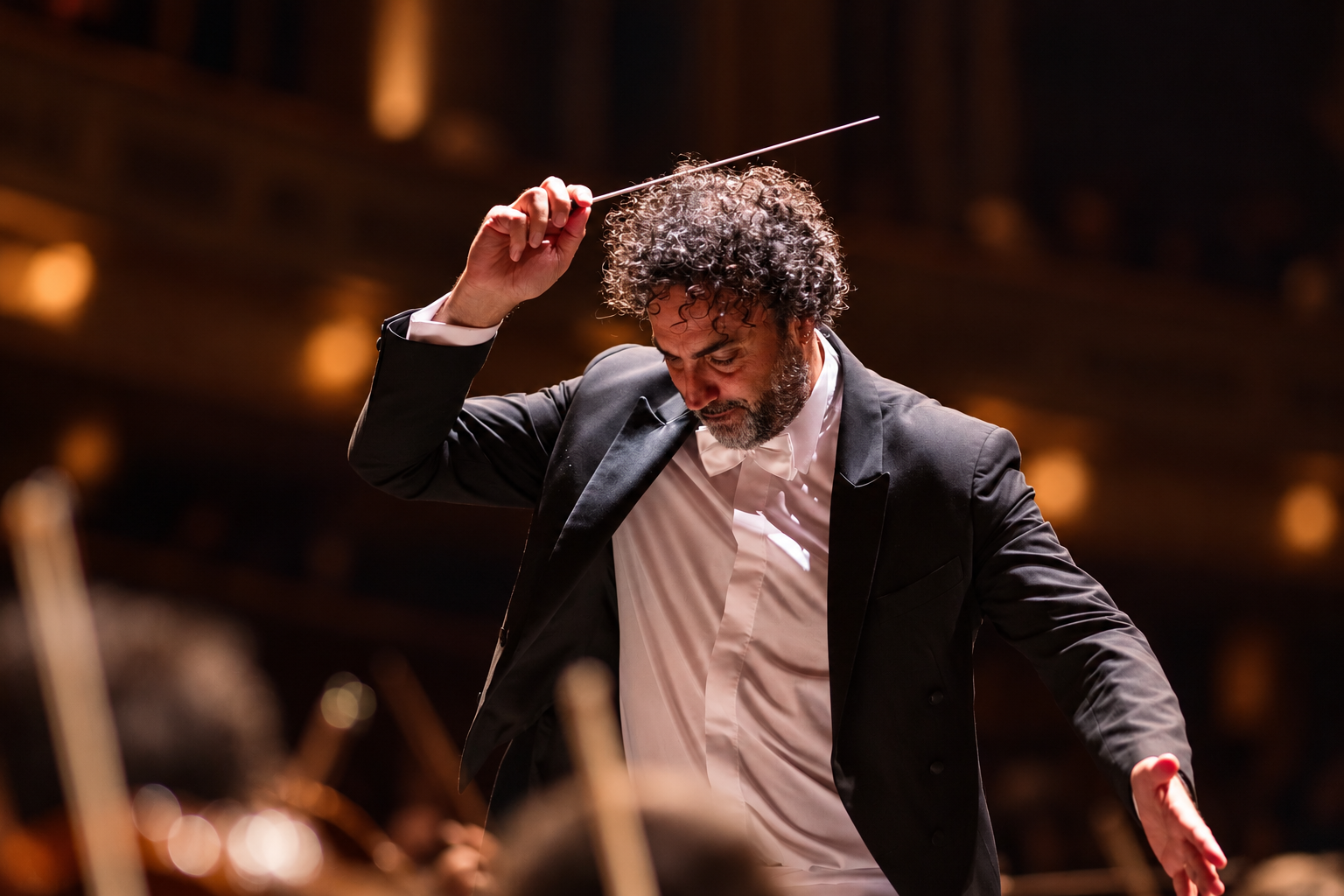
ON THE PODIUM
For Luis Miguel Clemente, conducting begins long before the first gesture. His approach to interpretation is informed by international orchestral experience, a rigorous technical foundation rooted in the Musin–Metters tradition, and a scholarly background in musicology and ethnomusicology. His doctoral research into Carlos Kleiber’s conducting technique further reflects a sustained interest in how musical thought becomes gesture — and how gesture shapes sound.
This relationship between thought, gesture and sound lies at the centre of his artistic practice. Clemente approaches the score as the foundation of an interpretation shaped by musical understanding, imagination and dialogue with the orchestra. His aim is to bring structure and expressive freedom into balance, allowing the music to unfold with both interpretative conviction and the spontaneity of live performance.
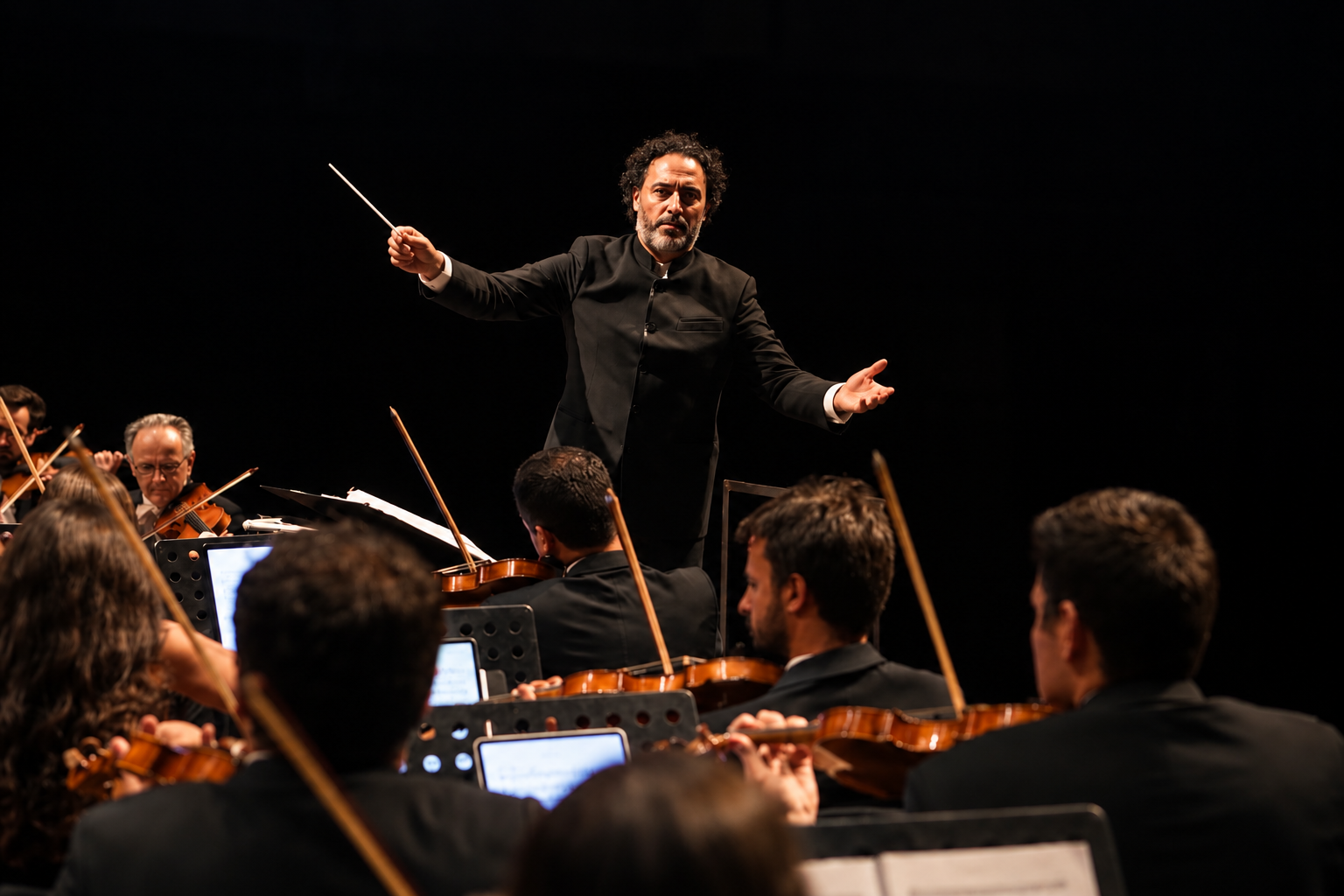
ARTISTIC PERSPECTIVE
For Luis Miguel Clemente, artistic programming is an extension of musical interpretation. With a particular affinity for the symphonic repertoire of the nineteenth and twentieth centuries, he approaches each programme as an opportunity to establish meaningful connections between works, periods and musical traditions. His artistic choices bring established masterpieces into dialogue with less frequently performed works, Portuguese musical heritage and contemporary creation — not simply to broaden the repertoire, but to reveal new perspectives on the music itself.
Underpinning this approach is a conviction that classical music must remain artistically vital and culturally relevant in the twenty-first century. Clemente seeks to create concert experiences that challenge expectations without compromising artistic depth, encourage discovery without sacrificing familiarity, and engage audiences through the expressive power of the music. For him, the future of orchestral music lies not in choosing between tradition and innovation, but in continually renewing the dialogue between them.